

Why It’s Important To Benchmark Your Warehouse Operations
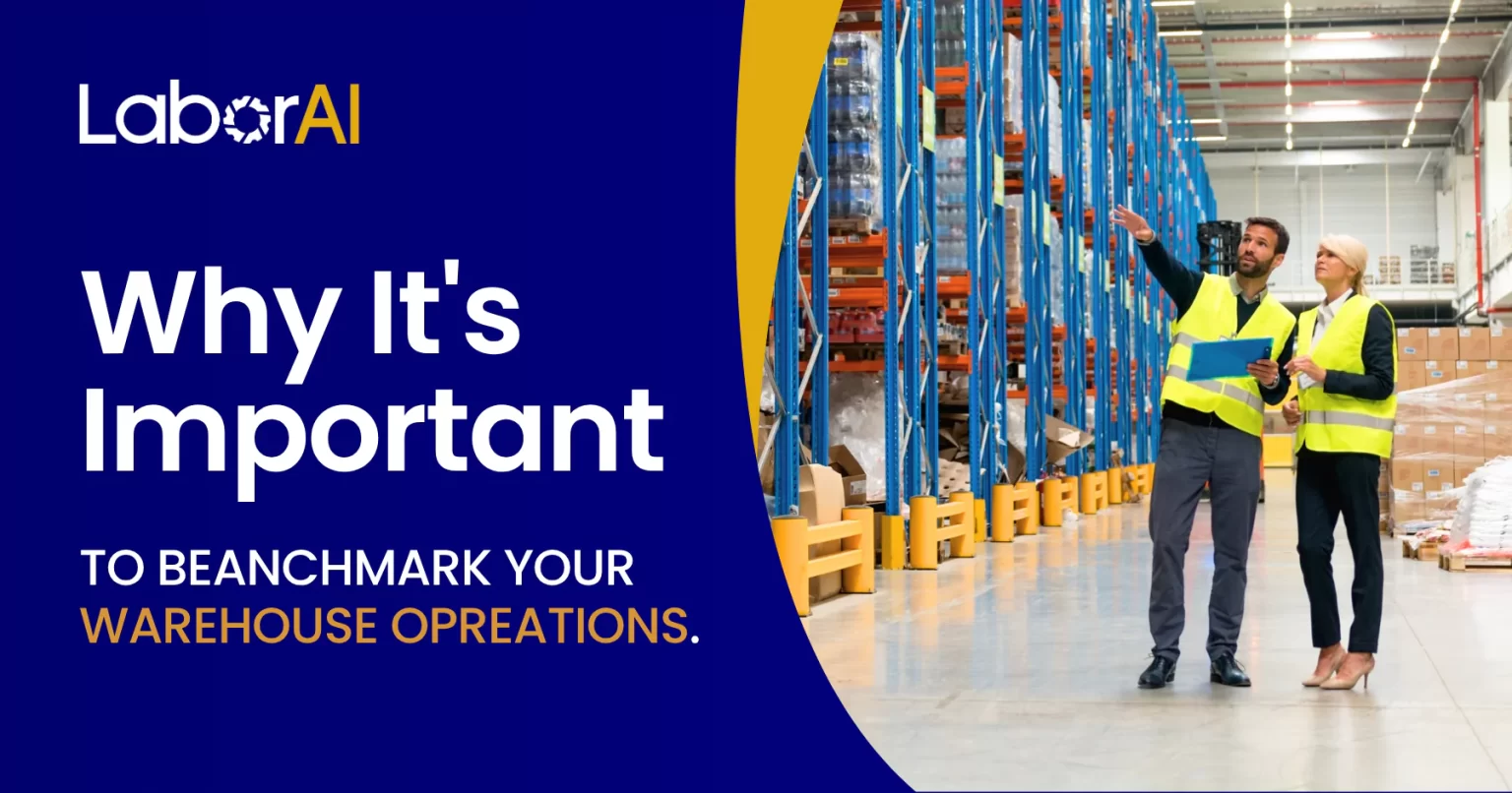
In the highly competitive warehousing and logistics industry, benchmarking has become an essential tool for businesses of all sizes. Whether it’s a multinational company or a small independent operation, having reliable data on operational efficiency directly affects labor costs, productivity, and overall profitability. By comparing internal performance to industry standards, businesses gain the insight needed to make informed decisions and stay competitive—or even get ahead.
What is Benchmarking?
Benchmarking is the process of measuring current performance and comparing it to established industry standards. In warehouse operations, this typically involves tracking key performance indicators (KPIs) related to labor, time management, and output to identify strengths and areas for improvement.
In the past, benchmarking was complex and often limited to large organizations with significant resources. Today, advancements in software—such as LaborAI—have made benchmarking accessible to warehouses of any size. With the right tools, even smaller operations can identify hidden inefficiencies and implement strategies to improve workforce performance and operational processes.
Why Large Companies Rely on Benchmarking
For large organizations, benchmarking is critical to maintaining competitiveness, especially when managing multiple facilities. Each location comes with its own challenges, including differences in labor availability and throughput levels. By standardizing metrics across all sites, companies can identify inconsistencies, establish clear benchmarks, and ensure each facility performs at its highest potential.
Benchmarking is also increasingly important as labor costs rise and the workforce becomes more limited. Companies are under pressure to “do more with less,” making it essential to understand how labor is utilized at every stage of warehouse operations. As businesses scale or adapt to demand, benchmarking helps set realistic labor standards, improve efficiency, and ensure that every activity supports overall operational goals.
Why Benchmarking Matters for Small and Mid-Sized Warehouses
For smaller operations, efficiency is even more critical because every labor hour and resource has a direct impact. Inefficiencies can be felt more quickly than in larger organizations, making it essential to identify and address productivity gaps.
Benchmarking allows smaller warehouses to take a data-driven approach similar to larger enterprises. It is no longer a costly or time-consuming process. Tools like LaborAI provide detailed tracking and highlight small, actionable improvements that can significantly enhance daily operations. For instance, if picking or packing processes consistently fall below industry standards, that insight can be used to refine training or adjust workflows—improving productivity without adding resources.
How Benchmarking Drives Weekly Improvements One of the key advantages of benchmarking is its ongoing value. While a one-time performance snapshot is useful, real progress comes from continuous monitoring and improvement: • Track Progress Over Time: Benchmarking establishes a baseline for operations. Reviewing this data weekly allows managers to measure progress and evaluate the impact of changes. LaborAI simplifies this by generating weekly reports, reducing the need for manual analysis.
• Identify Labor Optimization Opportunities: Regular benchmarking helps uncover inefficiencies before they become major issues. If performance consistently falls below benchmarks, managers can quickly adjust workflows, reassign tasks, or provide additional training—especially useful during seasonal demand shifts.
• Enable Strategic Labor Adjustments: Weekly insights make it easier to respond to bottlenecks or slowdowns. If a specific task repeatedly underperforms, resources can be reallocated or underlying issues investigated. LaborAI supports these decisions with clear, actionable data.
• Set Realistic, Data-Driven Goals: Benchmarking provides a solid foundation for setting achievable goals. With clear standards in place, teams understand expectations and can focus on meaningful performance targets aligned with industry benchmarks.
Why LaborAI Stands Out
LaborAI is built not just to measure performance, but to support continuous improvement. Unlike traditional tools that simply track data, LaborAI includes built-in industry benchmarks across 30 critical touchpoints. This allows warehouses to instantly compare their performance against top industry standards.
With easy-to-understand reports and a focus on actionable insights, LaborAI helps managers identify improvement areas, optimize labor costs by up to 7%, and increase productivity without adding complexity.
Benchmarking can transform warehouse operations by enabling smarter, data-driven decisions and better control over labor costs. Whether for a large enterprise or a smaller warehouse, tools like LaborAI provide a clear path to improved efficiency and stronger competitiveness. When used as an ongoing process rather than a one-time analysis, benchmarking equips businesses with the insights needed to remain agile, efficient, and profitable in an ever-changing industry.
What is Benchmarking?
Benchmarking is the process of measuring current performance and comparing it to established industry standards. In warehouse operations, this typically involves tracking key performance indicators (KPIs) related to labor, time management, and output to identify strengths and areas for improvement.
In the past, benchmarking was complex and often limited to large organizations with significant resources. Today, advancements in software—such as LaborAI—have made benchmarking accessible to warehouses of any size. With the right tools, even smaller operations can identify hidden inefficiencies and implement strategies to improve workforce performance and operational processes.
Why Large Companies Rely on Benchmarking
For large organizations, benchmarking is critical to maintaining competitiveness, especially when managing multiple facilities. Each location comes with its own challenges, including differences in labor availability and throughput levels. By standardizing metrics across all sites, companies can identify inconsistencies, establish clear benchmarks, and ensure each facility performs at its highest potential.
Benchmarking is also increasingly important as labor costs rise and the workforce becomes more limited. Companies are under pressure to “do more with less,” making it essential to understand how labor is utilized at every stage of warehouse operations. As businesses scale or adapt to demand, benchmarking helps set realistic labor standards, improve efficiency, and ensure that every activity supports overall operational goals.
Why Benchmarking Matters for Small and Mid-Sized Warehouses
For smaller operations, efficiency is even more critical because every labor hour and resource has a direct impact. Inefficiencies can be felt more quickly than in larger organizations, making it essential to identify and address productivity gaps.
Benchmarking allows smaller warehouses to take a data-driven approach similar to larger enterprises. It is no longer a costly or time-consuming process. Tools like LaborAI provide detailed tracking and highlight small, actionable improvements that can significantly enhance daily operations. For instance, if picking or packing processes consistently fall below industry standards, that insight can be used to refine training or adjust workflows—improving productivity without adding resources.
How Benchmarking Drives Weekly Improvements One of the key advantages of benchmarking is its ongoing value. While a one-time performance snapshot is useful, real progress comes from continuous monitoring and improvement: • Track Progress Over Time: Benchmarking establishes a baseline for operations. Reviewing this data weekly allows managers to measure progress and evaluate the impact of changes. LaborAI simplifies this by generating weekly reports, reducing the need for manual analysis.
• Identify Labor Optimization Opportunities: Regular benchmarking helps uncover inefficiencies before they become major issues. If performance consistently falls below benchmarks, managers can quickly adjust workflows, reassign tasks, or provide additional training—especially useful during seasonal demand shifts.
• Enable Strategic Labor Adjustments: Weekly insights make it easier to respond to bottlenecks or slowdowns. If a specific task repeatedly underperforms, resources can be reallocated or underlying issues investigated. LaborAI supports these decisions with clear, actionable data.
• Set Realistic, Data-Driven Goals: Benchmarking provides a solid foundation for setting achievable goals. With clear standards in place, teams understand expectations and can focus on meaningful performance targets aligned with industry benchmarks.
Why LaborAI Stands Out
LaborAI is built not just to measure performance, but to support continuous improvement. Unlike traditional tools that simply track data, LaborAI includes built-in industry benchmarks across 30 critical touchpoints. This allows warehouses to instantly compare their performance against top industry standards.
With easy-to-understand reports and a focus on actionable insights, LaborAI helps managers identify improvement areas, optimize labor costs by up to 7%, and increase productivity without adding complexity.
Benchmarking can transform warehouse operations by enabling smarter, data-driven decisions and better control over labor costs. Whether for a large enterprise or a smaller warehouse, tools like LaborAI provide a clear path to improved efficiency and stronger competitiveness. When used as an ongoing process rather than a one-time analysis, benchmarking equips businesses with the insights needed to remain agile, efficient, and profitable in an ever-changing industry.
Are you lost in a sea of Logistics Providers?
TALK TO AN EXPERT

Copyright © 2025 b2bsupplychainconsultants.com. All rights reserved. | Privacy Policy | Designed by: PeterTheProgrammer.com